Published
The short answer
A crash evidence question needs a review of the actual event, records and applicable legal framework. This guide separates common scenarios so you can identify useful evidence and the qualifications that can change the answer. Michael P. Minuti offers a free evaluation; no claim, coverage or outcome is guaranteed.
21 Del. C. §§ 2118 and 2118B — PIP and claim handling · 18 Del. C. § 3902 — uninsured and underinsured motorists · 10 Del. C. §§ 8119 and 8132 — injury limitation and comparative negligence
Legal framework and qualifications
Delaware's PIP statute, 21 Del. C. § 2118, addresses specified accident-related medical expenses and earnings losses for eligible people. A claim against a negligent driver is a separate question. The vehicle, insured status, policy and expense documentation determine which coverage needs review; the same loss cannot simply be collected twice.
Under 10 Del. C. § 8132, a plaintiff's negligence generally reduces damages and bars recovery when it exceeds the defendants' combined negligence. Section 8119 generally supplies a two-year personal-injury limitation, subject to case-specific exceptions. Insurance correspondence or ongoing treatment should not be assumed to preserve a lawsuit deadline.
21 Del. C. §§ 2118 and 2118B — PIP and claim handling · 18 Del. C. § 3902 — uninsured and underinsured motorists · 10 Del. C. §§ 8119 and 8132 — injury limitation and comparative negligence
Rear-ended in Delaware with neck pain: what to bring to a lawyer
A rear-end collision can leave you dealing with pain, missed shifts and an insurer asking whether the impact was serious enough. Vehicle damage alone does not establish the full medical picture. Explain your symptoms and treatment history accurately rather than trying to prove an injury with a repair estimate.
Keep photographs of both vehicles, the crash-report number, first medical visit, discharge instructions and any work restrictions. Note whether there were multiple impacts or whether your vehicle was pushed into another car. These details help distinguish the sequence of events from assumptions about a routine rear-end crash.
An early payment may come before a clinician can explain your recovery. Ask Michael to review the proposed release and records before deciding. He can investigate responsibility and potential coverage without promising that every rear-end collision supports a successful claim.
21 Del. C. §§ 2118 and 2118B — PIP and claim handling · 18 Del. C. § 3902 — uninsured and underinsured motorists · 10 Del. C. §§ 8119 and 8132 — injury limitation and comparative negligence
Delaware intersection crash: when both drivers say they had green
Being injured at an intersection is stressful enough without two insurers insisting their driver had the right of way. A traffic light dispute needs evidence about timing, direction and movement, not simply a louder account of what happened.
Save witness contacts, original dashcam footage and photographs showing lanes and signals. Write down your direction of travel and whether you were turning or proceeding straight. Nearby cameras may overwrite footage, so tell an attorney promptly about businesses or vehicles that might have recorded the collision.
Do not guess about a signal you did not see or accept an adjuster's fault percentage as a finding. Michael can review available records and discuss preservation requests. Fault, insurance eligibility and the value of supported losses require separate assessments.
21 Del. C. §§ 2118 and 2118B — PIP and claim handling · 18 Del. C. § 3902 — uninsured and underinsured motorists · 10 Del. C. §§ 8119 and 8132 — injury limitation and comparative negligence
Injured in a Delaware left-turn crash: reviewing the collision sequence
A left-turn crash can involve disputed speed, sight lines or the point at which a driver entered the intersection. The fact that someone turned does not replace a careful investigation of how the vehicles came together.
Keep scene photographs, vehicle resting positions, witness information and details about traffic queues or obstructed views. Preserve the original files. If you remember braking or seeing the other vehicle late, describe that honestly rather than estimating speeds you could not measure.
Before resolving the claim, ask how liability evidence and treatment uncertainty affect the offer. Michael can review both drivers' accounts and the records available to test them. No turn maneuver alone guarantees that one party owes compensation.
21 Del. C. §§ 2118 and 2118B — PIP and claim handling · 18 Del. C. § 3902 — uninsured and underinsured motorists · 10 Del. C. §§ 8119 and 8132 — injury limitation and comparative negligence
Delaware chain-reaction crash: which impact caused your injuries?
When three or more vehicles collide, insurers may disagree about which driver started the sequence and when each impact occurred. Your position in the line and your recollection of separate jolts can help focus the investigation, but medical causation also needs professional evidence.
Save photographs showing every involved vehicle and contact details for witnesses beyond the car immediately behind you. Record whether you had stopped before the first impact. Identify any dashcam and tell your provider about the sequence you actually remember.
Multiple vehicles do not automatically mean multiple recoveries for the same loss. Michael can investigate responsible drivers, applicable policies and disputed causation. Bring claim numbers for each insurer so negotiations do not proceed as disconnected conversations.
21 Del. C. §§ 2118 and 2118B — PIP and claim handling · 18 Del. C. § 3902 — uninsured and underinsured motorists · 10 Del. C. §§ 8119 and 8132 — injury limitation and comparative negligence
Delaware parking-lot collision with injuries: why location matters
A collision in a parking lot may involve a reversing vehicle, a moving pedestrian or poor visibility near an entrance. Calling it a low-speed accident does not determine whether someone was injured or who acted carelessly.
Photograph parking-space markings, aisle direction, signs, sight obstructions and vehicle damage when safe. Ask for an incident-report number and preserve witness details. Identify the business or property manager without assuming that owning the lot makes that person responsible for the collision.
A private-property incident still requires a coverage and negligence review. Michael can assess the driver evidence and whether any separate property condition warrants investigation. Do not sign a release merely because an insurer describes the incident as minor.
21 Del. C. §§ 2118 and 2118B — PIP and claim handling · 18 Del. C. § 3902 — uninsured and underinsured motorists · 10 Del. C. §§ 8119 and 8132 — injury limitation and comparative negligence
Sideswiped on a Delaware road: documenting a disputed lane change
After a sideswipe, each driver may say the other crossed the lane line. Damage patterns can help, but they need to be considered alongside road layout, vehicle movement and independent evidence. Avoid reconstructing uncertain details as facts.
Keep original photos of the full vehicles as well as close-ups of damage. Save footage showing the moments before contact, not only the collision itself. Note roadwork, merging lanes and nearby vehicles that may have affected visibility or movement.
Ask for a review if the insurer relies only on its driver's account. Michael can compare the available records and explain what remains uncertain. Treatment records and losses matter independently of whether liability can be resolved quickly.
21 Del. C. §§ 2118 and 2118B — PIP and claim handling · 18 Del. C. § 3902 — uninsured and underinsured motorists · 10 Del. C. §§ 8119 and 8132 — injury limitation and comparative negligence
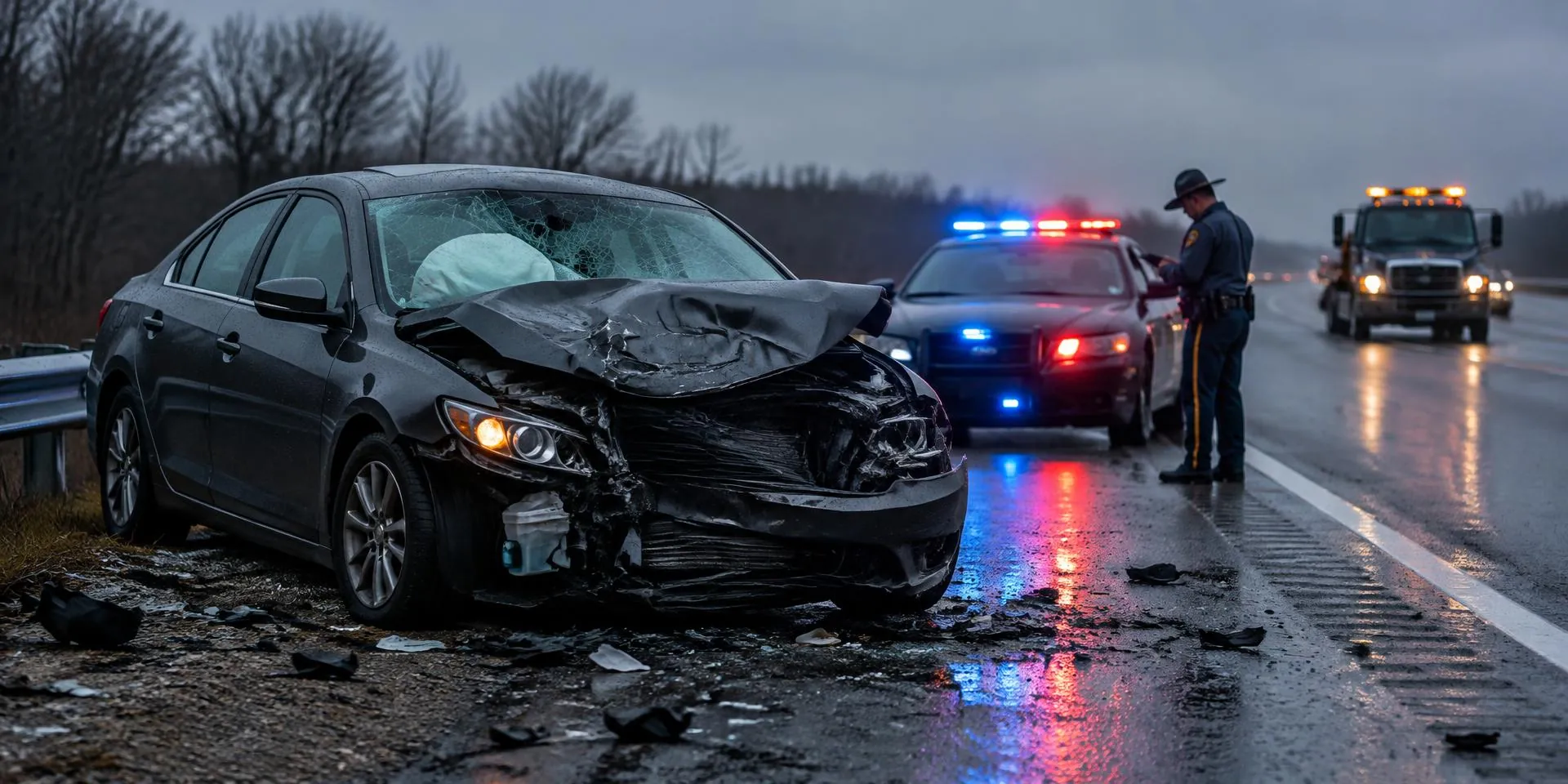
Delaware crash in rain: bad weather does not answer every fault question
Rain can reduce visibility and traction, but weather alone does not establish that a crash was unavoidable. An injury claim may require investigation of driving choices, road conditions and what each person could reasonably observe.
Save photographs showing standing water, tire tracks, signage and lighting if they were captured safely. Record the approximate time and location. Preserve dashcam footage and avoid later photographs being mistaken for the conditions at the moment of impact.
A lawyer can evaluate whether driving conduct or another supported condition contributed to the collision. Michael will not infer negligence simply from wet pavement. Bring medical information and insurer letters so evidence issues and coverage questions can be reviewed together.
21 Del. C. §§ 2118 and 2118B — PIP and claim handling · 18 Del. C. § 3902 — uninsured and underinsured motorists · 10 Del. C. §§ 8119 and 8132 — injury limitation and comparative negligence
Injured by an alleged distracted driver in Delaware: evidence beyond suspicion
Seeing a driver look down may raise questions about distraction, but it does not prove that a phone caused the crash. Your account matters most when it separates what you actually observed from what you suspect happened.
Preserve witness statements, video, the report number and any admission you accurately remember. Do not try to access another person's phone or private account. Relevant records may require a lawful request, discovery or other legal process.
Michael can assess whether additional evidence is available and whether it supports a negligence theory. Avoid posting accusations as established facts. A consultation can address both the collision investigation and the immediate worries about bills or missed work.
21 Del. C. §§ 2118 and 2118B — PIP and claim handling · 18 Del. C. § 3902 — uninsured and underinsured motorists · 10 Del. C. §§ 8119 and 8132 — injury limitation and comparative negligence
Delaware crash with disputed speeding: what evidence can support your account?
You may remember a vehicle approaching quickly without being able to give a reliable speed. Injury claims should distinguish impressions from measurements. A crash investigator may consider multiple sources instead of treating a witness's estimate as a calculation.
Keep footage, scene photographs and witness contacts. Identify skid marks or debris only if documented safely; do not return to traffic to measure them yourself. Tell the attorney if a commercial vehicle or electronically recorded driving data may be involved.
Do not let an uncertain speed estimate become the only explanation of your claim. Michael can review the collision evidence and whether expert analysis is appropriate. A free evaluation can identify missing information without predicting what an investigation will find.
21 Del. C. §§ 2118 and 2118B — PIP and claim handling · 18 Del. C. § 3902 — uninsured and underinsured motorists · 10 Del. C. §§ 8119 and 8132 — injury limitation and comparative negligence
Delaware collision without an ambulance ride: can you still ask for help?
Some people leave a crash scene thinking they are well enough to go home and later notice symptoms. Not taking an ambulance does not by itself decide a legal claim, but the treatment timeline and medical explanation deserve careful review.
Write down when symptoms appeared and when you sought care. Keep appointment records and explain the collision truthfully to clinicians. Do not delay needed care to build evidence, and do not ask a provider to change records to support a claim.
Michael can review the timing, insurer objections and available medical records. A clinician, not a website, determines diagnosis and treatment. Bring the facts as they happened rather than assuming the absence of emergency transportation makes a consultation pointless.
21 Del. C. §§ 2118 and 2118B — PIP and claim handling · 18 Del. C. § 3902 — uninsured and underinsured motorists · 10 Del. C. §§ 8119 and 8132 — injury limitation and comparative negligence
A practical first-conversation checklist
For this crash evidence concern, start with the incident or treatment timeline, the people and organizations involved, and the written response you have received. Identify the specific issue you need help with rather than trying to calculate a settlement from an online example. Keep original records and mark uncertain details as uncertain.
Tell Michael about any proposed agreement, hearing notice, filing concern or urgent decision. Bring available documents, not a perfect file. Preserve evidence only through safe and lawful means; care and immediate safety take priority over photographs or paperwork.
21 Del. C. §§ 2118 and 2118B — PIP and claim handling · 18 Del. C. § 3902 — uninsured and underinsured motorists · 10 Del. C. §§ 8119 and 8132 — injury limitation and comparative negligence
Ask Michael for a free case evaluation
Michael P. Minuti of McCann Dillon Jaffe & Lamb, LLC reviews injury matters throughout Delaware from his Wilmington office at 222 Delaware Avenue, Suite 1005. Call him directly at 302-290-4646 or use the free case evaluation form to request follow-up. Explain what happened and the concern that matters most to you.
The evaluation is free. No attorney fee is due unless money is recovered; expenses and representation terms are discussed in the written agreement. Do not include detailed confidential information or medical files in the initial form. A submission does not create an attorney-client relationship, and no outcome or timetable is guaranteed.
21 Del. C. §§ 2118 and 2118B — PIP and claim handling · 18 Del. C. § 3902 — uninsured and underinsured motorists · 10 Del. C. §§ 8119 and 8132 — injury limitation and comparative negligence
Sources & further reading
- 21 Del. C. §§ 2118 and 2118B — PIP and claim handling
- 18 Del. C. § 3902 — uninsured and underinsured motorists
- 10 Del. C. §§ 8119 and 8132 — injury limitation and comparative negligence
This article provides general information, not legal advice. Laws and procedures can change; deadlines and available claims depend on individual circumstances. No result is guaranteed.