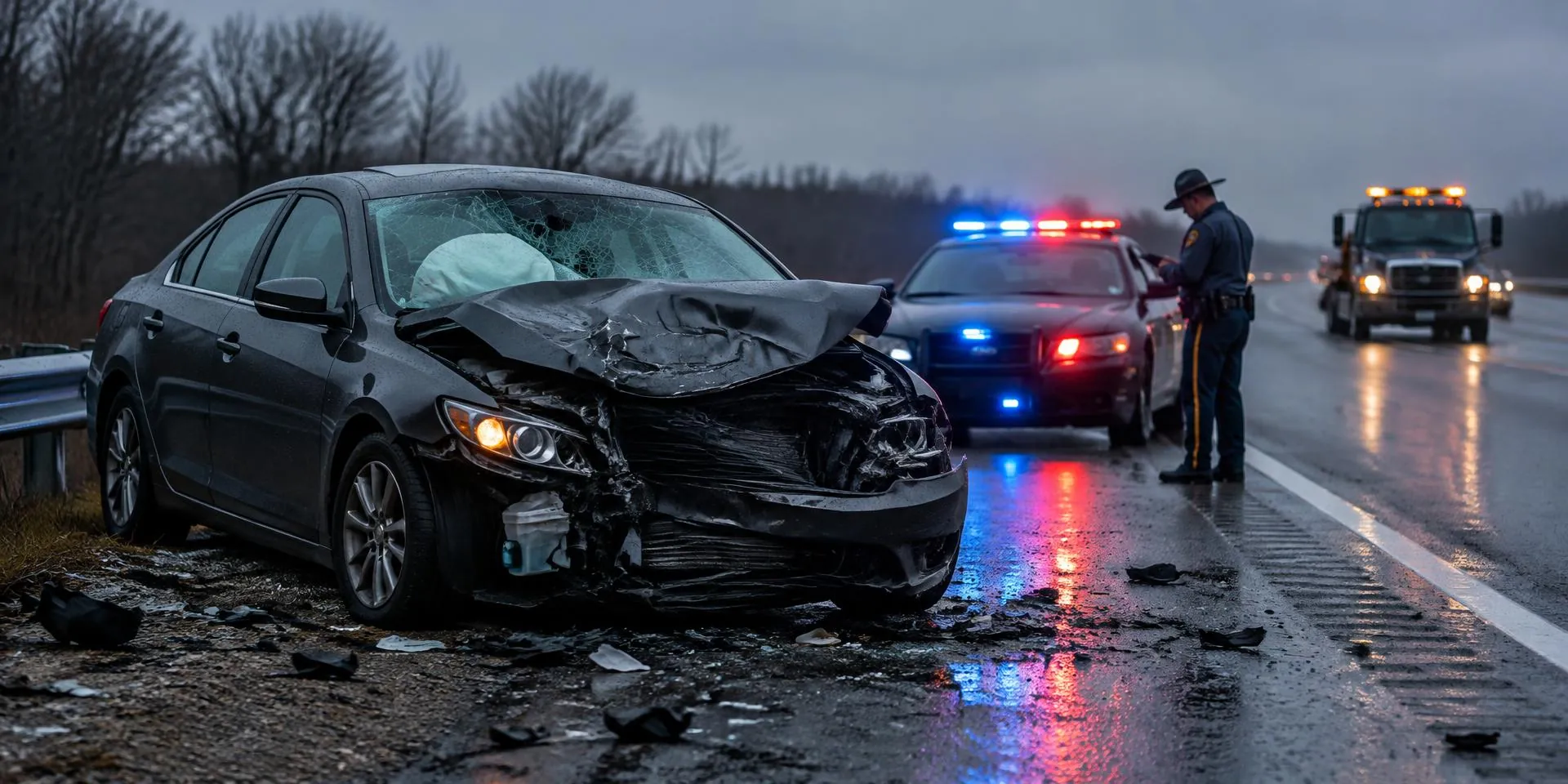
A car with a damaged front end beside police vehicles on a wet road

Delaware injury claims

Delaware Government Vehicle Accident Lawyer

A crash involving a Delaware public vehicle requires identifying the actual owner, operator and government entity before evaluating immunity, insurance and notice. State and school-related rules differ from county or municipal rules. A local motor-vehicle exception is qualified, not automatic liability; preserve crash records and seek prompt individual review.

Free consultation

What matters now

Protect your health and the original evidence.

An injury deserves an individual review. Identify what happened, who was involved and which records can explain the incident without assuming that an insurance offer or incident report settles responsibility.

01

Get appropriate care

Seek medical attention and tell the provider how you were injured. Keep follow-up instructions and restrictions. Do not return to danger to collect evidence.

02

Preserve facts without changing them

Save original photographs, witness contacts, incident information and insurer letters. Note uncertainties honestly. Do not post private medical details or alter potential evidence.

03

Ask for a claim-path review

Michael can review the parties, evidence, possible coverage and time-sensitive issues. Reporting an incident, negotiating with an insurer and filing a legal claim are different steps.

How I help

Discuss your injury with Michael directly.

Call 302-290-4646 for a free consultation. Michael P. Minuti practices with McCann Dillon Jaffe & Lamb, LLC in Wilmington and is licensed in Delaware, Pennsylvania and New Jersey. No attorney fee is due unless there is a recovery; expenses and representation terms are addressed in a written agreement.

Attorney attribution: Michael P. Minuti · McCann Dillon Jaffe & Lamb, LLC

Last updated: · Prepared for legal and editorial review; attorney approval has not been confirmed. Sourcing and corrections.

Identify the entity before applying an immunity rule

A marked public vehicle does not reveal every relevant legal relationship. Record its agency, unit and plate information if safely available. The title owner, operator’s employer and task may differ. State departments, county or municipal entities and private service contractors require separate analysis.

Section 4010 supplies definitions for the county and municipal subchapter, including an employee definition that excludes independent contractors. A contract label alone is not a full investigation: the actual relationship, alleged conduct and applicable statutory definition need review.

10 Del. C. §§ 4001–4005 — State and school immunity provisions · 10 Del. C. §§ 4010–4013 — county and municipal tort claims

State immunity is not the local vehicle exception

Section 4001 addresses specified official duties, good faith and absence of gross or wanton negligence, allocating a burden to the plaintiff concerning its immunity elements. Showing that an element is absent should not be described as automatically waiving the State’s separate sovereign immunity.

A State vehicle’s insurance and any applicable waiver must be investigated independently. Section 4005 addresses specified insurance authority, not blanket liability for every crash. This page does not assert that a policy exists, that a waiver applies or that every public employee can be sued.

10 Del. C. §§ 4001–4005 — State and school immunity provisions

County and municipal vehicle exceptions have qualifications

Section 4011 provides general immunity with preserved categories of protection. Section 4012(1) supplies an exception concerning negligence in ownership, maintenance or use of motor vehicles and specified equipment. The exception must be read with § 4011, including immunities preserved notwithstanding § 4012.

For actions permitted by this subchapter, § 4013(a) generally limits damages including costs to $300,000 for all claims from a single occurrence, subject to the purchased-liability-insurance exception in the statute. This is not a universal per-person limit and should not be applied to every State, school or contractor claim.

10 Del. C. §§ 4010–4013 — county and municipal tort claims

Notice, insurance and filing are separate questions

Section 4013(c) permits local notice ordinances with a statutory protection where notice is given within one year of occurrence. That language is not a universal one-year lawsuit deadline. The applicable municipality, ordinance, service method and injury filing period require separate review. No individual local ordinance is represented as checked on this page.

Keep incident reports, photographs, vehicle information, medical records and all letters. Do not assume a claim number, payment of a bill or an adjuster conversation establishes a waiver or preserves suit. Michael can review who must receive notice, what coverage may respond and what an offer would release.

10 Del. C. §§ 4010–4013 — county and municipal tort claims · 10 Del. C. §§ 8119, 8132 — injury limitation and comparative negligence

Evidence to preserve safely

This is a practical preparation checklist, not a statement that each item is required by law or available in every case. Michael can discuss preservation requests for records you do not possess.

  • Agency and vehicle: Save plate, unit and report information without approaching an unsafe scene.
  • Driver relationship: Record the employer and task if known, separating facts from guesses.
  • Notice and correspondence: Keep copies, delivery evidence and dates of reports or claims.
  • Collision and losses: Preserve original footage, treatment records, restrictions and wage information.

Potential parties and different claim paths

Questions to investigate—not findings that a listed party is liable
Potential partyQuestionImportant qualification
State agency or employeeIs there an applicable waiver and liability theory?Do not substitute the municipal vehicle exception for State analysis.
County or municipal entityDoes the vehicle exception apply with preserved immunities?Section 4013 limits and actual insurance require review.
Private contractor or unrelated driverWhat conduct and coverage contributed?Government involvement does not make every party immune.

Primary sources

General-information disclaimer: Attorney advertising, not legal or medical advice. Current law, individual facts and applicable exceptions control. Reading this page or submitting a form does not create an attorney-client relationship. No result, payment amount or timetable is guaranteed.

What this public vehicle claim may involve

Who may be responsible

Actual State, local entity, driver and private contractors. Each party’s actual role and a supported legal basis need review; involvement alone does not establish liability.

Public vehicle evidence to preserve safely

Care and emergency assistance come first. Keep what you lawfully have; do not enter dangerous areas, confront anyone or alter potential evidence. An attorney can discuss records controlled by others.

  • Vehicle plate and agency markings
  • Actual owner and operator information
  • Report numbers and witness contacts
  • Existing video and preservation requests
  • Notices sent and insurer correspondence
Printable evidence checklists

Compare the applicable claim paths

State and local immunity frameworks differ, as do insurance and notice questions. A private contractor’s vehicle is not automatically a government vehicle. Identify the legal owner and operator, then assess coverage and any applicable immunity exception before relying on ordinary crash rules.

Notice and filing decision aid · Delaware injury answers

What happens after you contact Michael

Start with the location, dates, people involved, treatment and the question worrying you most. For a public vehicle review, the records above help identify the next investigation steps. Do not upload sensitive medical files to the initial form.

Michael can discuss possible representation, missing evidence, applicable timing and written fee and expense terms. The initial review is free; no attorney fee is due unless there is a recovery. A request or conversation does not itself create representation, stop a deadline or guarantee acceptance or an outcome.

Discuss your public vehicle situation

Primary legal sources

A closer look

Clear answers at a difficult time.

A car with a damaged front end beside police vehicles on a wet road

Can I sue simply because a government vehicle hit me?

Not automatically. Entity identity, supported negligence, immunity, waiver where needed and procedural requirements must be reviewed before assessing a viable claim.

A car with a damaged front end beside police vehicles on a wet road

Does § 4012 apply to every public vehicle?

No. It belongs to the county and municipal subchapter and must be read with its definitions and preserved immunities. State and school-related claims need distinct analysis.

A car with a damaged front end beside police vehicles on a wet road

Is the local damages limit $300,000 for each injured person?

Section 4013(a) generally addresses all damages, including costs, for all claims from one occurrence in an action permitted by that subchapter. Its purchased-insurance exception matters; it is not a universal per-person cap.

A car with a damaged front end beside police vehicles on a wet road

Do I have a year to file every government crash case?

No. Section 4013(c) concerns local notice ordinances, not a universal lawsuit filing deadline. Entity-specific notice and applicable limitation periods need prompt review.

A car with a damaged front end beside police vehicles on a wet road

Does required or purchased insurance eliminate immunity?

Do not assume so. The policy, statutory framework and any relevant waiver require individual analysis; insurance authority alone does not establish liability.

A car with a damaged front end beside police vehicles on a wet road

What if the vehicle was driven by a contractor?

Identify the contractor, driver’s employer and vehicle owner. Section 4010 excludes independent contractors from its employee definition, but the actual relationship and other claim defenses still require review.

Start with a conversation

You do not have to sort this out alone. One call is all it takes to get the answers you need.

Request a free consultation

Tell me what happened.

Send your information to request a free consultation with Michael. Prefer to talk now? Call 302-290-4646.

Submitting this form does not create an attorney-client relationship. Please do not include confidential details until we have spoken.