Published
The short answer
A property and fall evidence question needs a review of the actual event, records and applicable legal framework. This guide separates common scenarios so you can identify useful evidence and the qualifications that can change the answer. Michael P. Minuti offers a free evaluation; no claim, coverage or outcome is guaranteed.
10 Del. C. §§ 8119 and 8132 — injury claims and fault · 25 Del. C. § 1501 — residential and farm guests · 25 Del. C. ch. 53 — rental obligations
Legal framework and qualifications
A Delaware property injury requires case-specific review of the visitor's status, the condition, who controlled the premises and evidence of causation. The existence of a hazard is not by itself a finding that an owner owes damages. For unpaid guests and trespassers at private residential or farm premises, 25 Del. C. § 1501 supplies a special framework with qualifications; retail-invitee assumptions should not automatically be applied.
Delaware's general injury limitation in 10 Del. C. § 8119 and comparative-negligence statute in § 8132 may affect an ordinary negligence claim, subject to exceptions and the applicable claim type. A report to management or insurer negotiation does not itself protect every deadline. Rental repair duties also require causation and other liability questions to be evaluated separately.
10 Del. C. §§ 8119 and 8132 — injury claims and fault · 25 Del. C. § 1501 — residential and farm guests · 25 Del. C. ch. 53 — rental obligations
Delaware grocery-store fall near a leak: evidence of the condition
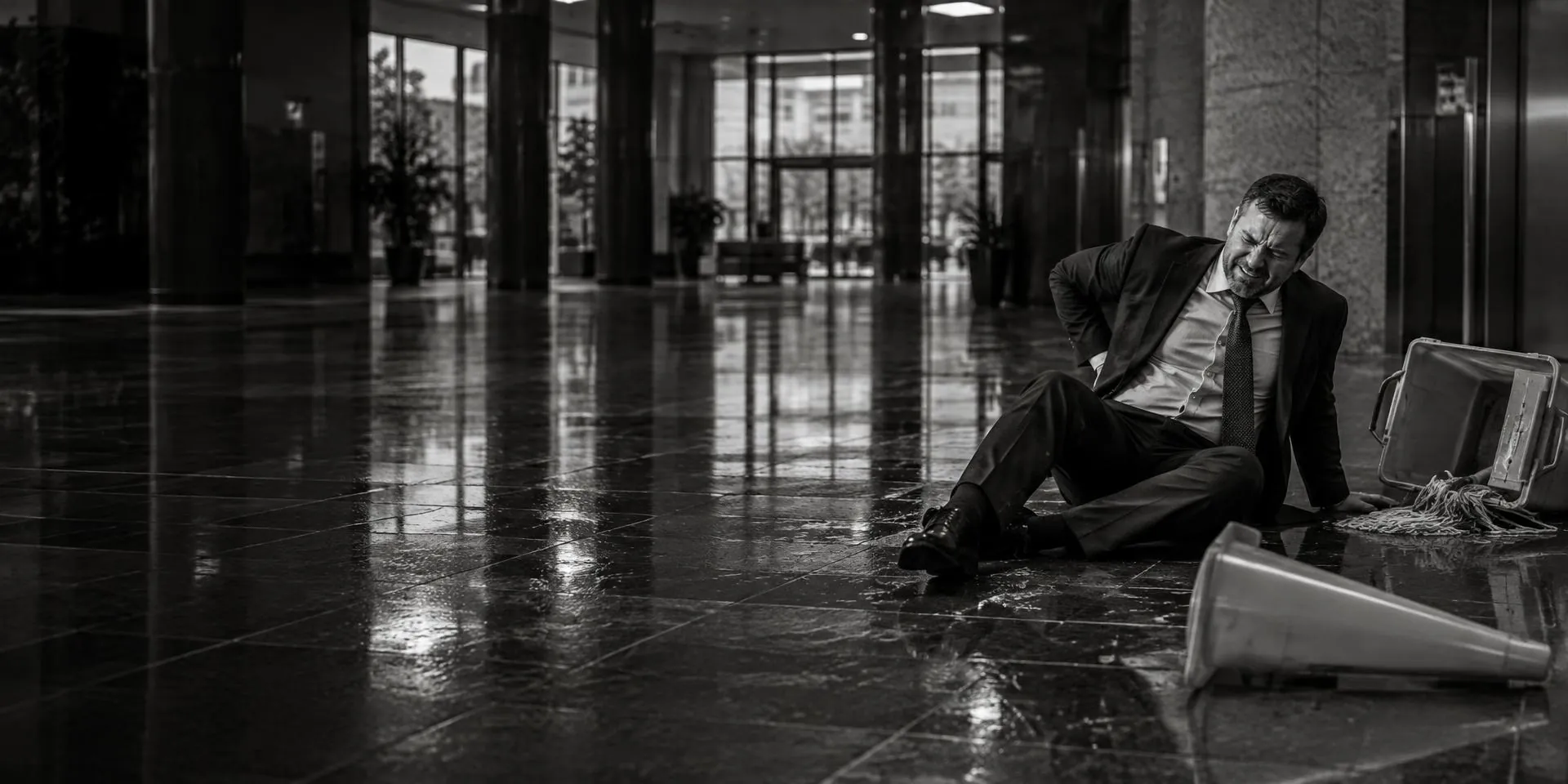
A wet floor can raise questions about where the water came from, inspections and whether staff knew or should have known about the condition. Falling near a freezer does not establish that it leaked or that the store had notice.
Keep photographs, the incident-report information, witness names and shoes worn at the time. Describe puddle size or tracks only as actually observed. Tell an attorney about nearby cameras and avoid treating a later cleanup as a complete account of the earlier condition.
Michael can review control, notice, causation and any fault arguments. A free evaluation can identify records to preserve rather than promising that every store fall supports damages. Bring medical information and the store's written response if available.
10 Del. C. §§ 8119 and 8132 — injury claims and fault · 25 Del. C. § 1501 — residential and farm guests · 25 Del. C. ch. 53 — rental obligations
Delaware apartment stair rail breaks: earlier repair requests matter
A broken rail may raise maintenance questions, especially when residents previously reported a problem. A repair request can be important evidence, but its wording, recipient and relation to the failed condition need review.
Save emails, maintenance tickets, photographs and witness contacts. Identify the stair location and who managed it at the time. Preserve the clothing or equipment involved if relevant, and avoid handling unstable structural pieces to recreate the event.
Michael can assess applicable rental obligations and injury liability separately. A landlord duty alone does not prove that it caused the injury. Bring both prior complaints and treatment records so the evaluation is grounded in the actual condition and timeline.
10 Del. C. §§ 8119 and 8132 — injury claims and fault · 25 Del. C. § 1501 — residential and farm guests · 25 Del. C. ch. 53 — rental obligations
Delaware shared-hallway fall in poor lighting
A dark hallway may affect visibility, but lighting needs to be reviewed alongside the actual obstacle and movement. Describing the area as dark does not identify who controlled it or establish that lighting caused the fall.
Keep safely obtained photos, location details, repair requests and witness information. Note whether bulbs were out, fixtures absent or a separate condition was involved. Later photographs should be dated so they are not presented as the exact conditions at the incident.
Michael can evaluate responsibility, maintenance records and the medical evidence. A free review can identify unanswered questions without declaring every poorly lit area negligent. Include insurer or property-manager correspondence and any statement you were asked to sign.
10 Del. C. §§ 8119 and 8132 — injury claims and fault · 25 Del. C. § 1501 — residential and farm guests · 25 Del. C. ch. 53 — rental obligations
Delaware ceiling-collapse injury in a rental home
A ceiling collapse can involve structural conditions, water damage or other causes that need investigation. Rental status and management records may matter, but the collapse itself does not identify every responsible party.
Preserve photographs taken safely, earlier leak reports, repair tickets and landlord communications. Record the room and date, and identify witnesses. Do not return to an unsafe unit or remove structural material just to collect evidence.
Michael can review rental obligations and supported injury claims, including who controlled repairs. Technical inspection may be necessary. A consultation can help identify records to preserve while medical care and safe housing remain the immediate priorities.
10 Del. C. §§ 8119 and 8132 — injury claims and fault · 25 Del. C. § 1501 — residential and farm guests · 25 Del. C. ch. 53 — rental obligations
Delaware visitor injured at a friend's home: special guest rules
An injury during a social visit raises different legal questions from a fall in a public store. Delaware's residential guest statute may apply to an unpaid guest, with important qualifications. Friendship and homeowners insurance do not automatically establish a claim.
Explain why you were visiting, whether any payment or business purpose was involved and the condition that caused the injury. Keep photographs, medical records and communications. Do not assume the owner's insurance necessarily covers a particular loss.
Michael can review visitor status and the relevant statutory framework before discussing potential liability. A free evaluation can clarify why an apparently similar retail case may not provide the right comparison. Bring the facts without changing the visit's purpose to fit a rule.
10 Del. C. §§ 8119 and 8132 — injury claims and fault · 25 Del. C. § 1501 — residential and farm guests · 25 Del. C. ch. 53 — rental obligations
Delaware delivery worker hurt on residential steps: visitor status matters
A delivery visit to a residence may involve a business purpose rather than a social visit. The visitor's status and actual task affect the premises analysis. It should not be assumed that every person on residential property is treated identically.
Save delivery records, photographs of the steps, incident communications and company information. Identify whether you were an employee or working through another arrangement. Keep work-benefit notices if the incident was reported as an employment injury.
Michael can review the premises facts and possible work coverage together. Visitor classification and compensation exclusivity require individual analysis. A free consultation can identify the relevant claim paths without assuming that a residential address defeats or guarantees recovery.
10 Del. C. §§ 8119 and 8132 — injury claims and fault · 25 Del. C. § 1501 — residential and farm guests · 25 Del. C. ch. 53 — rental obligations
Delaware store display falls onto a customer
A falling display may involve setup, stocking, contact by another person or a product issue. Injury alone does not establish which event caused the display to fall. A timely factual record can help distinguish these possibilities.
Keep photographs of the display and surrounding area, incident-report information and witness contacts. Identify store employees who responded and any cameras nearby. Do not move merchandise or recreate the incident to produce a more convincing photograph.
Michael can examine control, causation and potential preservation requests. A free evaluation can address whether the records support liability and which additional evidence matters. Bring treatment documents and any insurer questionnaire before guessing at its questions.
10 Del. C. §§ 8119 and 8132 — injury claims and fault · 25 Del. C. § 1501 — residential and farm guests · 25 Del. C. ch. 53 — rental obligations
Delaware hotel bathroom fall: review the exact condition
A bathroom fall can involve water, a fixture, maintenance or personal movement. The fact that a floor was wet does not answer every duty or causation question. Identify the specific condition rather than relying on a general assumption about slippery bathrooms.
Save photographs, room information, prior maintenance reports and witness details. Note whether you reported the condition before or after the incident. Preserve medical records and any hotel response without altering the scene or continuing to use an unsafe fixture.
Michael can review responsibility and any fault arguments based on the actual evidence. A consultation can identify useful records without promising that the hotel is liable. Include booking and incident records if they help identify who operated the property.
10 Del. C. §§ 8119 and 8132 — injury claims and fault · 25 Del. C. § 1501 — residential and farm guests · 25 Del. C. ch. 53 — rental obligations
A practical first-conversation checklist
For this property and fall evidence concern, start with the incident or treatment timeline, the people and organizations involved, and the written response you have received. Identify the specific issue you need help with rather than trying to calculate a settlement from an online example. Keep original records and mark uncertain details as uncertain.
Tell Michael about any proposed agreement, hearing notice, filing concern or urgent decision. Bring available documents, not a perfect file. Preserve evidence only through safe and lawful means; care and immediate safety take priority over photographs or paperwork.
10 Del. C. §§ 8119 and 8132 — injury claims and fault · 25 Del. C. § 1501 — residential and farm guests · 25 Del. C. ch. 53 — rental obligations
Ask Michael for a free case evaluation
Michael P. Minuti of McCann Dillon Jaffe & Lamb, LLC reviews injury matters throughout Delaware from his Wilmington office at 222 Delaware Avenue, Suite 1005. Call him directly at 302-290-4646 or use the free case evaluation form to request follow-up. Explain what happened and the concern that matters most to you.
The evaluation is free. No attorney fee is due unless money is recovered; expenses and representation terms are discussed in the written agreement. Do not include detailed confidential information or medical files in the initial form. A submission does not create an attorney-client relationship, and no outcome or timetable is guaranteed.
10 Del. C. §§ 8119 and 8132 — injury claims and fault · 25 Del. C. § 1501 — residential and farm guests · 25 Del. C. ch. 53 — rental obligations
Sources & further reading
- 10 Del. C. §§ 8119 and 8132 — injury claims and fault
- 25 Del. C. § 1501 — residential and farm guests
- 25 Del. C. ch. 53 — rental obligations
This article provides general information, not legal advice. Laws and procedures can change; deadlines and available claims depend on individual circumstances. No result is guaranteed.